


US-India Interim Trade Agreement: Global Trade and Long-Term Impact
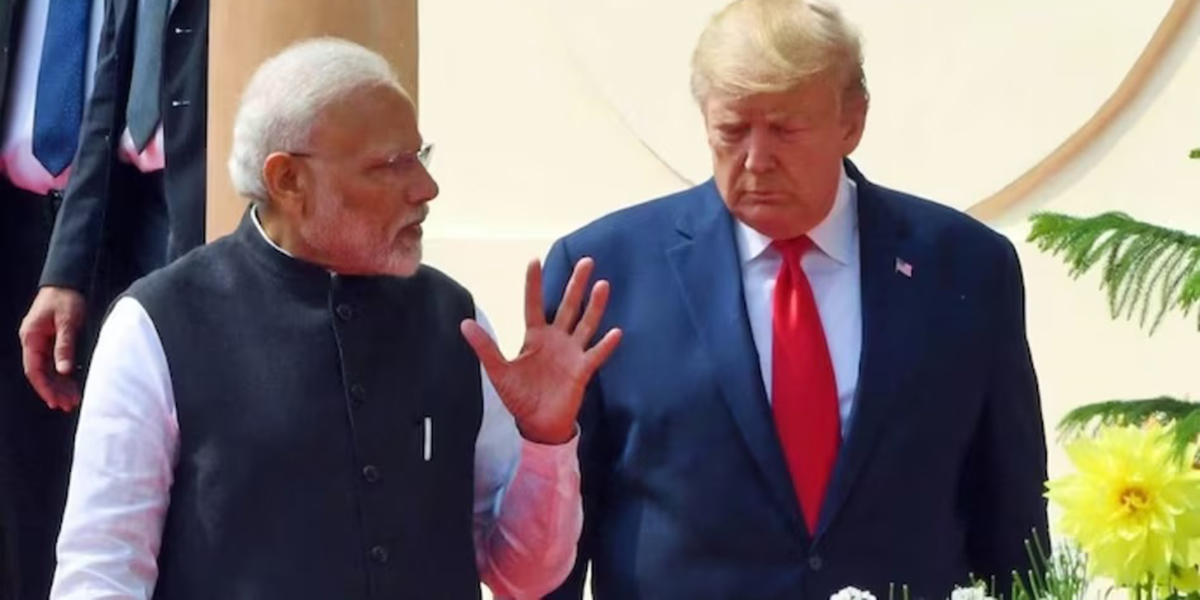
Agency. With the formal release of the interim trade agreement between the US and India, the work of searching for and analyzing its meaning in the world trade and geopolitical circles seems to have begun. After both countries issued a joint statement on Friday (February 6) and made the main points of the agreement public, it has become impossible to limit it to just a trade agreement.
The agreement, which came into effect on Saturday, is a clear sign that the relationship between the two countries will shift from economic cooperation to a strategic alliance. On February 2, US President Donald Trump announced a trade deal with India, reducing the maximum tariff on India from 50 percent to 18 percent.
The tariff rate was increased by 25 percent to a maximum of 50 percent in retaliation for oil imports from Russia last year. Now, public statements have made it clear that the agreement is not just an economic decision to reduce tariffs but also a sign of strategic restructuring. According to the agreement, the US has applied this new rate to Indian goods such as garments, footwear, leather, plastics, rubber, and chemicals, which is expected to directly benefit Indian exports.
India’s Commerce Minister Piyush Goyal announced the agreement, claiming that it provides greater access to the US market for Indian exporters, farmers and fishing communities. Access to the world’s largest consumer market has been a long-term economic goal for India, which the agreement appears to partially address. Under it, India has committed to purchasing $500 billion worth of goods and services from the US in the coming years, mainly energy products.
While this figure may seem challenging in the short term, it highlights the potential for bilateral trade. But the biggest question raised by this agreement is – why has the US prioritized India now? The answer seems to lie beyond the arithmetic of trade, and within the changing balance of global politics.
In particular, against the backdrop of China’s growing influence and the Russia-Ukraine conflict, the deal is aligned with America’s ‘decoupling’ strategy, which aims to make India the hub of an alternative supply chain.
Energy, Russia and Security: The Business Case
In an executive order issued by the White House alongside the strategic agreement, President Trump stated that India has committed to stop importing oil directly or indirectly from Russia. This point is considered the most sensitive and meaningful part of the agreement.
India has been increasing its imports of cheap Russian oil amid Western sanctions against Russia following the Ukraine war. This has provided India with short-term economic benefits, but has also created unease in its strategic relations with the US and Europe.
The current deal appears to be an attempt to get India out of that dilemma. In return, India has committed to increasing its purchases of energy products—oil, gas, and, in the long term, LNG—from the United States. This will provide a new market for US energy exports while also leading India towards supply diversification.
The move is strategically important for India, which sees energy security as a key component of national security. In addition, the agreement also emphasizes cooperation in the digital economy, data flows, and intellectual property rights, which is expected to strengthen India’s ‘Make in India’ initiative.
Along with energy, another important aspect included in the agreement is an agreement to expand defense cooperation for the next 10 years. It is indicated that this will include arms purchases, defense technology sharing, joint military exercises, and cooperation in defense production. Although detailed details have not been made public, the message is clear – ‘The relationship between the US and India will no longer be limited to a trade partnership.’
When viewed in conjunction with the US-India-Japan-Australia (Quad) alliance, it appears to be part of a US strategy to contain China’s influence in the Indo-Pacific. According to analysts, this defense cooperation is directly linked to China’s rise and the balance of power in the Indo-Pacific region.
The US wants to groom India as a long-term partner for regional balance, while India is also looking for a way to establish itself as a world power. It too will engage in strategic cooperation based on its own national interests. In this way, Indian Prime Minister Narendra Modi seems to have succeeded.
The agreement opens up new opportunities for technology transfer and joint research, which could accelerate India’s military modernization. In this sense, the trade agreement actually looks like a document presenting a strategic alliance in an economic guise.
World Trade, South Asia: Long Term Implications
While this agreement will bring immediate benefits to both the US and India, its impact is certain to extend to South Asia and the global trading system. Expanding India’s access to the US market will further strengthen India’s role in regional supply chains. This indicates that India-centric manufacturing and export structures in South Asia could be further strengthened.
Additionally, the agreement sees India agreeing to reduce tariffs on US agricultural products such as fruits, dairy and meat products, but maintaining restrictions on sensitive items to protect the Indian agricultural sector.
For a country like Nepal, this situation is both an opportunity and a challenge. On the one hand, the possibility of connecting to supply chains through India could increase, which could give Nepali exporters indirect access to the US market. For example, Nepal’s textile and handicraft sectors could benefit from Indian partnerships.
On the other hand, there is also the risk of intensifying competition. India’s easy access to sectors, especially agriculture, textiles, and labor-intensive manufacturing, could put pressure on Nepali manufacturing. Nepal needs to review its trade policy and devise a strategy to leverage the India-US relationship, including by activating regional alliances such as BIMSTEC.
From a global trade perspective, the agreement also signals the growing dominance of bilateral and regional agreements over the multilateral trading system. As the World Trade Organization (WTO) weakens, powerful countries are moving forward with special agreements with their strategic partners.
The US-India interim agreement is another example of this trend. Although it is called interim, it leaves the door open for a full trade agreement in the future. Issues such as trade in services, the digital economy, data flows, intellectual property rights, and supply chain management are likely to be added in future phases.
Most importantly, this agreement has sent a message to the world, ‘Trade is no longer just an economic issue, but also a geopolitical tool. Reducing customs duties is the outer layer, while inside, a complex web of balance of power, energy politics, and security alliances is being woven.’
Conclusion,
While the US-India interim trade agreement may seem like a simple economic agreement on the surface, its true meaning is much deeper and multifaceted. It not only marks the transition of the relationship between the two countries from a trade partnership to a strategic alliance, but also marks a new chapter in the global balance of power.
Combined with the desire to break free from Russian energy dependence, to contain China’s influence, and to stabilize the Indo-Pacific region, this agreement is not just a decision for today, but a rehearsal for tomorrow’s world order. While it offers India an opportunity to become a hub for global supply chains, neighboring countries like Nepal will have to rethink their strategies and show the wisdom to benefit from it.
Ultimately, this deal has become a new version of ‘Namaste Trump’, aka the modified Trump, which is creating a new balance of geopolitical power along with economic gains.
(Note: Analysis prepared based on news, opinions, and points of agreement from international media)

Trump’s 48 hour ultimatum to Iran to open the Strait of Hormuz, Iran says- will be responded to, the war has now entered a new phase
US attack on Iran’s oil network: US Navy deploys 12 ships to Arabian Sea

Nepali Embassy urges those wishing to return home from Qatar to apply

NRNA’s 12th General Convention begins in Kathmandu

Iran’s stance that it will never surrender to Israel and the United States

Canadian Prime Minister Carney and Chinese President Xi hold talks: Historic agreement on everything from taxes to visas

FIFA World Cup 2026: The World Cup trophy is set to visit Canada in April and May before the tournament begins
