Genji’s protests spread to more than 25 European countries: Why did youth and workers take to the streets?
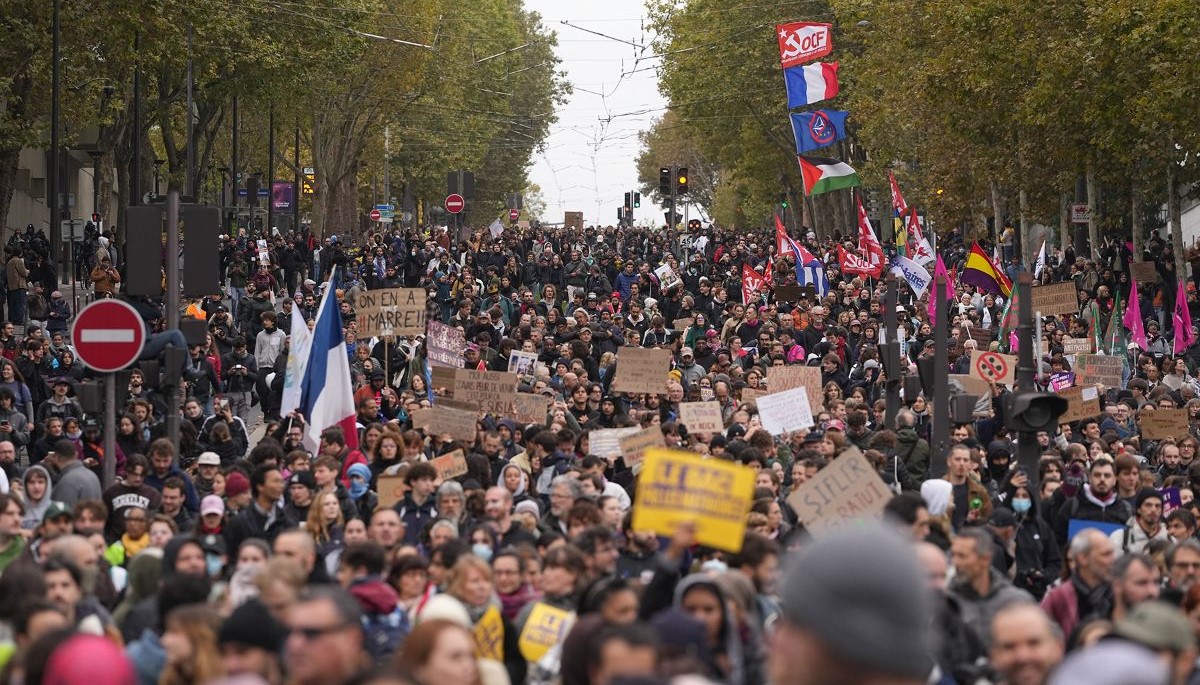
Agency. Thousands of young people have taken to the streets in more than 25 countries in Europe.
Student and youth organizations demonstrated on the same day, protesting rising inflation, unemployment, budget cuts in the education sector, climate change, and increasing military spending for war.
They have demanded a change in priorities, saying governments are focusing more on war and weapons than on securing the future of their own generation.
Youth and student organizations organized demonstrations or related movements in the UK, France, Germany, Italy, Spain, Austria, Portugal, Belgium, the Netherlands, Switzerland, Denmark, Norway, Sweden, Poland, Slovenia, the Czech Republic, Romania, Turkey, Ireland, Croatia, Hungary, Malta, Slovakia, Finland, and Luxembourg.
The international news agency Reuters reported that more than 50 youth and student organizations are participating in the coalition of organizers.
They declared November 20 an ‘International Youth and Student Strike’ and called for demonstrations with the slogan ‘Fight for our future, not their war’. According to organizers, about 400 young people from the city participated in the protest on Friday. According to Reuters, this movement has been organized in various European countries, inspired by the demonstrations that have been taking place in France for some time. However, Friday’s demonstrations were quieter and less well-attended than previous demonstrations in France, with a few hundred to thousands of people taking to the streets in most places. In Germany, a campaign called ‘Genzi Reggelt’, or ‘Genzi moves forward on its own’, held demonstrations in 73 cities and towns. Reuters reported that about 4,000 people participated in Alexanderplatz in the capital Berlin.
Thousands of students also took to the streets in the city of Cologne. Police said the turnout was lower than the estimated 5,000 people. Jasmine Hamadi, a university student participating in the demonstration in Cologne, expressed her dissatisfaction with the budget cuts being made in the education sector. “Budget cuts are being made not only in universities, but also in the entire education system and schools. I am not happy with this. That is why I have come here to protest and press for change. This cannot go on like this anymore,” she said. In Italy, the protests were more widespread than in other countries. Protesters opposed Prime Minister Giorgi Meloni’s economic policies and demanded higher wages, investment in public services and cuts in military spending. Italy’s largest trade union, the CGIL, said demonstrations were taking place in more than 100 locations across the country.
Both public and private sector employees participated in the strike, affecting schools, healthcare services, and public transportation. CGIL chief Maurizio Landini claimed that more than one million people took part in the protests in Italy alone, although this figure has not been independently confirmed. “Today is an important day, because young people are taking to the streets, not just in Italy, but across Europe. The demand for change is growing among the general public,” Landini said. Demand for investment in education and the future, not war The common demand of the young people participating in Friday’s demonstrations was for increased government investment in education, health and other public services. They criticized European countries for increasing spending on weapons and the military while budgets for schools and universities were being cut. Protesters in Germany, Italy and the UK protested against increased military spending and the possibility of compulsory military service.
They said that military spending in Europe was increasing due to wars including in Ukraine and Gaza, but that the burden would have to be borne by the new generation in the future. In the Italian capital, Rome, protesters chanted slogans such as “Spend money on schools, not war” and “We want a life without inflation.” Many protesters carried Palestinian flags and questioned the role of European governments in Israel’s war in Gaza. Adam Powell Davies, national president of Socialist Students UK, has said that young people will not sit idly by as budget cuts are being made to the education sector. “While our school, college and university budgets have been cut, billions have been allocated for war. Let’s raise our voices for our future, not for their war,” he said. In the British capital, London, hundreds of students gathered in Parliament Square, near the Houses of Parliament. A placard carried by a protester read, “I didn’t come to protest by skipping class, I was working to survive.” Protesters in Rome, Genoa, Bologna and Milan in Italy also protested against the policy of increasing military spending and demanded increased investment in public services. In Croatia, students boycotted classes to demand increased investment in education, housing, and public services. Hundreds of young people also participated in a demonstration in front of the university in Vienna, Austria.
The news reports mention that the police used tear gas and arrested some people after some chaos occurred during the demonstration. Concerns about the climate crisis and inflation are not limited to youth movements focused on education and military spending. High unemployment, the rising cost of living, climate change, and concerns about future job losses due to artificial intelligence (AI) have also become key issues of the protests. Evelyn, a 25-year-old American student who participated in the demonstration in Paris, France, said the new generation is worried about its future. “Many of us are thinking about our future. The cost of living is rising, the climate crisis is approaching, and climate change could kill billions of people,” she said. “If we leave everything to the people who are making decisions now, our future will be a future of death.” According to Eurostat, the European statistics agency, the prices of food, energy, transport and other daily necessities have increased by 59 to 78 percent in France, Italy, Spain and Portugal since 2000. This has also made it difficult for the new generation to make a living. In Italy, average full-time wages fell by almost five percent after adjusting for inflation between 2000 and 2025, according to data from the Organization for Economic Cooperation and Development (OECD). Over the same period, real wages rose by seven percent in Spain, 11 percent in France, and 20 percent in Portugal.
A new generation, raised amidst the COVID pandemic, the climate crisis, and wars in Ukraine, Gaza, Sudan, and Iran, has been complaining that political leadership has failed to secure their future. They say governments should invest in education, health, jobs, and solving the climate crisis instead of increasing military spending. The joint declaration of the protest organizations calls for an end to the policy of increasing military spending and arms production, the abolition of compulsory military service, increased investment in education and social security, and ensuring climate and social justice. Solidarity with the struggle of the Palestinian people is also one of their common demands. Youth discontent growing in Europe Friday’s protests in various European countries are seen as another form of the recent growing Genji movement. In the past year, youth-led anti-government protests have also taken place in various countries in South Asia, Africa, and the Americas, besides Europe. Although the issues of the protests vary from country to country, inflation, unemployment, corruption, good governance, education, and uncertainty about the future have become common themes. Large demonstrations in France have seen clashes with police and incidents of vandalism. According to the French Interior Ministry, 146,000 people took part in the nationwide demonstrations on November 17. However, trade unions claimed that more than 500,000 people took part. In Serbia, a student-led movement helped topple longtime leader Aleksandar Vucic in last month’s election.
Albania has also seen recent anti-government protests and discontent. Friday’s demonstrations were largely peaceful. London police said they had coordinated with organizers ahead of the demonstration and would respect the right to peaceful protest and freedom of expression. But they said they would take action if there was criminal activity during the demonstration. The demonstrations, which took place on the same day in different European countries, show that the discontent of a new generation is not limited to one country or government. Raising questions about priorities such as education, jobs, inflation, the climate crisis and war, young people are demanding that their voices be heard in decisions about their future.

The world’s largest crypto exchange Binance has suffered its biggest hack to date: $6.3 billion stolen
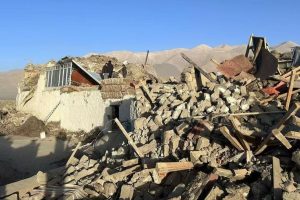
Powerful earthquake in Tibet: 53 confirmed dead, 65 injured

Bijaya Dashami being celebrated today with tika and jamara

Trump announces no attack on Iran before US midterm elections
India seeks alternative to US: Xi, Modi and Putin together for the first time in 10 years at BRICS summit

Blood donation program organized by Lions Club of Mississauga Canada Nepal (with photo feature)
Bhotekoshi flood: Death toll reaches 788, 25 hundreed still unaccounted for